
Leadership Certificate in Infant & Early Childhood Mental Health Consultation
Lead the future of infant and early childhood mental health consultation.
Most professional development delivers content. This one asks you to build something. Think of it as nine months of protected time to solve a real problem in your system — with the evidence base, the expert faculty, and the peer network to do it well. This nine-month certificate was built for the leaders who are ready to do that.


The Leadership Certificate in Infant & Early Childhood Mental Health Consultation (IECMHC) prepares experienced professionals to lead, design, evaluate, and scale IECMHC at the program, organizational, and systems level. This is not training in the consultant role — this is where professionals who already understand the work learn to shape it.

Over nine months, you will learn from the national leaders who built this field. Georgetown University's Thrive Center for Children, Families, and Communities — home of the Center of Excellence in Infant and Early Childhood Mental Health Consultation — brings together the practitioners, researchers, and system-builders who have shaped IECMHC from the ground up. You'll build fluency in the evidence base, implementation science, policy, and leadership skills that drive high-quality IECMHC. And you'll develop a capstone project tied directly to your professional context — a tangible deliverable you can use to advance your work the moment you complete the program.

You’ll also join a national cohort of peers who are doing this work across the country — a professional network that extends well beyond the certificate itself.
Looking for Practice-Focused IECMHC Training?
If you’re new to IECMHC or seeking to build your skills as a consultant in early childhood settings, our Practical Certificate in IECMHC provides focused training in the practice of consultation. The Practical Certificate is about learning the specialized skills of the consultant role, while the Leadership Certificate is about leading, designing, and scaling IECMHC at the systems level.
Program at a Glance
| Ideal for | Experienced mental health professionals and early childhood leaders positioned to lead, design, evaluate, manage, or scale IECMHC programs and systems |
| Duration | 9 months (Fall – Spring) |
| Tuition | $6,000 (limited scholarships available upon request) |
| Format | Online |
| Schedule | Live one Friday per month, 11:00 AM – 1:00 PM EST + asynchronous online |
| Semester of entry | Fall |
| CEU Credits | 10 |
| Cohort size | ~30-50 participants |
| Capstone | Applied, independent project connected to your professional work |
| After the program | Ongoing alumni office hours and an asynchronous alumni community to support your continued growth and connection. |
| Application opens | April 20, 2026 |
| Application deadline | August 1, 2026 |
| Certificate awarded by | Georgetown University |
The Gap We’re Closing
Consultation is one of the most effective tools in early childhood — and one of the most chronically underused and underfunded. Not just because qualified consultants are hard to find, but also because many leaders don’t yet have the tools to design, fund, and sustain it within their systems of support.
Georgetown’s Center of Excellence has spent more than twenty years studying this gap. Our research and field experience point to three interconnected problems:
- The workforce gap. Programs struggle to find consultants who are trained in the competencies that actually drive outcomes — or who reflect the communities they serve.
- The systems gap. Leaders don’t always know how to integrate consultation with coaching, quality improvement, and other early childhood supports — or how to build the organizational conditions that make it sustainable.
- The training gap. The leaders responsible for building consultation systems have had almost no dedicated professional development — no program designed to help them design, fund, evaluate, or sustain the work at scale.
The Leadership Certificate was built to close the systems gap — and to equip the leaders who are in the best position to close it.
Is This Program For You?
The Leadership Certificate is designed for professionals who are currently in, or aspire to be in, roles shaping how IECMHC is designed, delivered, evaluated, funded, and sustained. This includes:
- IECMHC program directors and managers
- Mental health clinicians moving into supervisory or systems-level roles
- State and local agency administrators overseeing IECMHC initiatives
- Early childhood systems leaders (Head Start directors, CCR&R leaders, Part C coordinators)
- Policy advisors and advocates working in early childhood mental health
- Funders and program officers supporting IECMHC investments
- Faculty and researchers studying IECMHC implementation and outcomes
Already an experienced consultant? This program is for you too. If you’ve been doing the consultation work and want to deepen your understanding of the systems, evidence, and leadership dimensions of the field, the Leadership Certificate adds that layer to your existing expertise. The Practical Certificate trains you to do the work. The Leadership Certificate helps you understand the system your work lives inside — and positions you to lead it.
What You’ll Gain
Upon successful completion of the Leadership Certificate, you will be able to:
- Analyze the evidence base for IECMHC and apply it to program design, evaluation, and advocacy at the systems level.
- Evaluate IECMHC program quality using implementation science frameworks and identify strategies for improvement, scaling, and sustainability.
- Design and lead IECMHC initiatives that integrate equity, cultural responsiveness, and family voice into systems and structures.
- Develop workforce strategies — including reflective supervision models and professional development pathways — that sustain high-quality consultation.
- Navigate policy landscapes and funding mechanisms to advance IECMHC at the state, local, or organizational level.
- Communicate the value and impact of IECMHC to diverse stakeholders, including policymakers, funders, administrators, and community partners.
- Complete a capstone project that produces a tangible, applied deliverable advancing IECMHC in your professional context.
- Connect with a national cohort of peers — program directors, policymakers, evaluators, and experienced consultants — and stay connected through alumni office hours and an ongoing asynchronous community long after the program ends.
Curriculum & Schedule
The Leadership Certificate is delivered over nine months in a Flex Learning format: one live session per month via Zoom (Fridays, 11:00 AM – 1:00 PM EST) plus asynchronous coursework through Canvas. A capstone project runs throughout the program, with milestones integrated into each session.
For more information, contact Program Support: IECMH-Certificates@georgetown.edu
Syllabus
The Capstone Project
The capstone is not a final paper — it’s a professional deliverable. Throughout the program, you’ll develop an applied project connected to your real work. Past capstone concepts have included program evaluation plans, policy briefs, consultation program design proposals, workforce development strategies, and advocacy toolkits. You’ll leave with something you can use immediately.
“The field of IECMHC has grown tremendously…and with that growth comes an urgent need for leaders who can design, evaluate, sustain, and scale this work. The Leadership Certificate prepares experienced professionals to step into those roles with the depth of knowledge, the evidence base, and the peer network to lead with confidence. Georgetown’s Thrive Center, home of the national Center of Excellence in IECMHC, is uniquely positioned to offer this kind of advanced professional development.”
Neal Horen, Ph.D., Associate Professor of Pediatrics; Director, Infant, Early Childhood and Relational Health, Thrive Center for Children, Families, and Communities
How the Program Works
Live sessions are taught in real-time by Georgetown instructors using Zoom video conferencing. You’ll participate in facilitated discussions, breakout groups, case-based activities, and collaborative exercises designed to mirror the professional learning community you’ll carry forward after the program. Asynchronous coursework is completed through Canvas at your own pace between sessions.
This program is led by Georgetown’s Center of Excellence team — the people who developed the national IECMHC competencies, trained practitioners across the country for more than two decades, and continue to do active field work in consultation, evaluation, and systems building.
Directors
SOM Research Track — Assistant Professor
Director of Infant, Early Childhood and Relational Health, Thrive Center for Children, Families, and Communities
GUMC Adjunct — Lecturer | Evaluator
Project Director
Guest Faculty
Guest faculty include national experts in IECMHC implementation, evaluation, equity, trauma-informed systems, and reflective supervision. Full bios are available on the program page.
Vilma Reyes, PhD

Dr. Vilma Reyes is an Assistant Clinical Professor at the University of California, San Francisco in the Child Trauma Research Program. Since 2009, she has been providing Child-Parent Psychotherapy (CPP) services, training, clinical supervision, consultation and coordinating community-based mental health outreach services and evaluation. She is a national trainer in CPP and has co-authored articles and chapters on CPP theory and application.
Kadija Johnston, LCSW
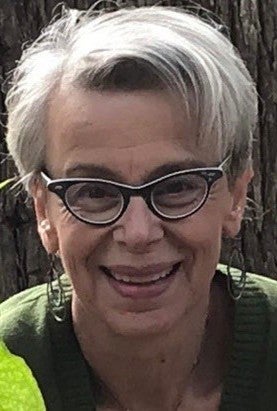
Kadija Johnston, LCSW, is a clinical social worker who has been a practitioner in the field of infant and early childhood mental health since 1985. The approach she developed as the Director of the Infant- Parent Program at UCSF serves as a model for other organizations, locally, nationally and internationally. Ms. Johnston is also active in local and national organizations involving infancy and early childhood mental health. In addition to numerous articles, Ms. Johnston also co- authored the book Mental Health Consultation in Child Care: Transforming Relationships with Directors, Staff, and Families.
Annie Davis Schoch, PhD

Dr. Annie Davis Schoch is a research scientist in early childhood at Child Trends. Annie conducts research and evaluation projects on early childhood services, focusing on program quality and access as mechanisms for enhancing equity and improving developmental trajectories. She has a particular emphasis on integrating mental health services into other service settings, with specific expertise in infant and early childhood mental health consultation. Annie completed her undergraduate degree at the University of Delaware and her PhD at The Catholic University of America in Washington, DC. She has co-authored a range of peer-reviewed papers, evaluation reports, manuals, and scholarly presentations.
Brandy Fox, LCSW, IECMH-E®

Brandy Fox, LCSW, IECMH-E®, is a Licensed Clinical Social Worker who received her Master of Social Work degree from Temple University, a post-graduate certificate in Autism Studies from Penn State, and Chatham University’s Infant Mental Health Certificate. She is the Director of Cross-Sector IECMH Initiatives for the Pennsylvania Key and is also currently the President of the Pennsylvania Association for Infant Mental Health and serves as the Endorsement Coordinator for the association. All her roles, both paid and volunteer, are focused on promoting cross-sector collaborations and strategies on infant and early childhood mental health policy and practice.
Evandra Catherine, Ph.D.

Dr. Evandra Catherine is the Director of Disability and Mental Health Policy at the Children’s Equity Project. She works with state and national leaders to build and sustain equitable early intervention and early childhood special education systems for children, birth to five, and their families. She also works with national and state professional development and technical assistance providers to advance equity in early care and learning programs through infant and early childhood mental health consultation. Dr. Catherine is also currently a fellow in the Young Scholars Program, sponsored by the Foundation for Child Development.
Sherryl Scott Heller, PhD

Dr. Heller’s broad focus is infant mental health, with reflective supervision and processing being one of her major areas of focus. She is currently involved with Tulane’s TIKES program, which provides infant and early childhood mental health consultation to childcare programs statewide. Dr. Heller is also the director of the Tulane Early Childhood Relationships Support and Services, a home visiting program, affiliated with the Fussy Baby Network, which supports caregivers who are struggling with their infant or toddler. Dr. Heller also presents regionally, nationally, and internationally on topics such as: the DC:0-5, early childhood mental health, mental health consultation, the Fussy Baby Network model, and reflective practice.
The Leadership Certificate is a selective program with a competitive admissions process. An application review committee offers admission to a select and diverse group of professionals to enrich the learning community. A completed application includes:
- Completed application form
- Resume/CV
- Statement of Purpose, including a short description of a possible Capstone project direction
Application Dates
- Application opens April 20, 2026
- Deadline for application: August 1, 2026
Program Prerequisites
Education
- A graduate degree in a relevant field — including mental health (psychology, counseling, social work), public health, public policy, education leadership, or a related discipline, OR
- Currently serving in a position that involves evaluating, developing, managing, or scaling IECMHC — or advocating for and/or funding IECMHC
Experience
- Currently working in mental health, early childhood, policy, evaluation, public health, or a related field
- Experience with IECMHC programs, consultation, or early childhood systems is valued but not required — the program is designed to build that grounding
Don’t meet these requirements exactly? Please reach out before you apply — we’re happy to discuss fit. We strive to be flexible while delivering an exceptional learning experience. Contact us at IECMH-Certificates@georgetown.edu
International Students
A TOEFL examination is not required for non-native speakers of English. Students are expected to read, write, and comprehend English at the graduate level to fully participate in and benefit from the program. Students from most countries may register for our online certificate programs. Due to international laws, residents of certain countries may be prohibited from registering.
Tuition & Funding
Tuition: $6,000
Noncredit professional certificates do not qualify for federal financial aid, scholarships, grants, or needs-based aid. However, several financing and funding options may be available.
Organizational Enrollment
Organizations interested in enrolling multiple participants — or in combining Leadership Certificate enrollment with Practical Certificate enrollment for other staff — are encouraged to contact us to discuss options. Contact: IECMH-Certificates@georgetown.edu
Organizations enrolling participants in both the Leadership and Practical certificates may be eligible for combined pricing. Contact us to learn more.
Contact Us
For questions about the program, please contact: IECMH-Certificates@georgetown.edu .